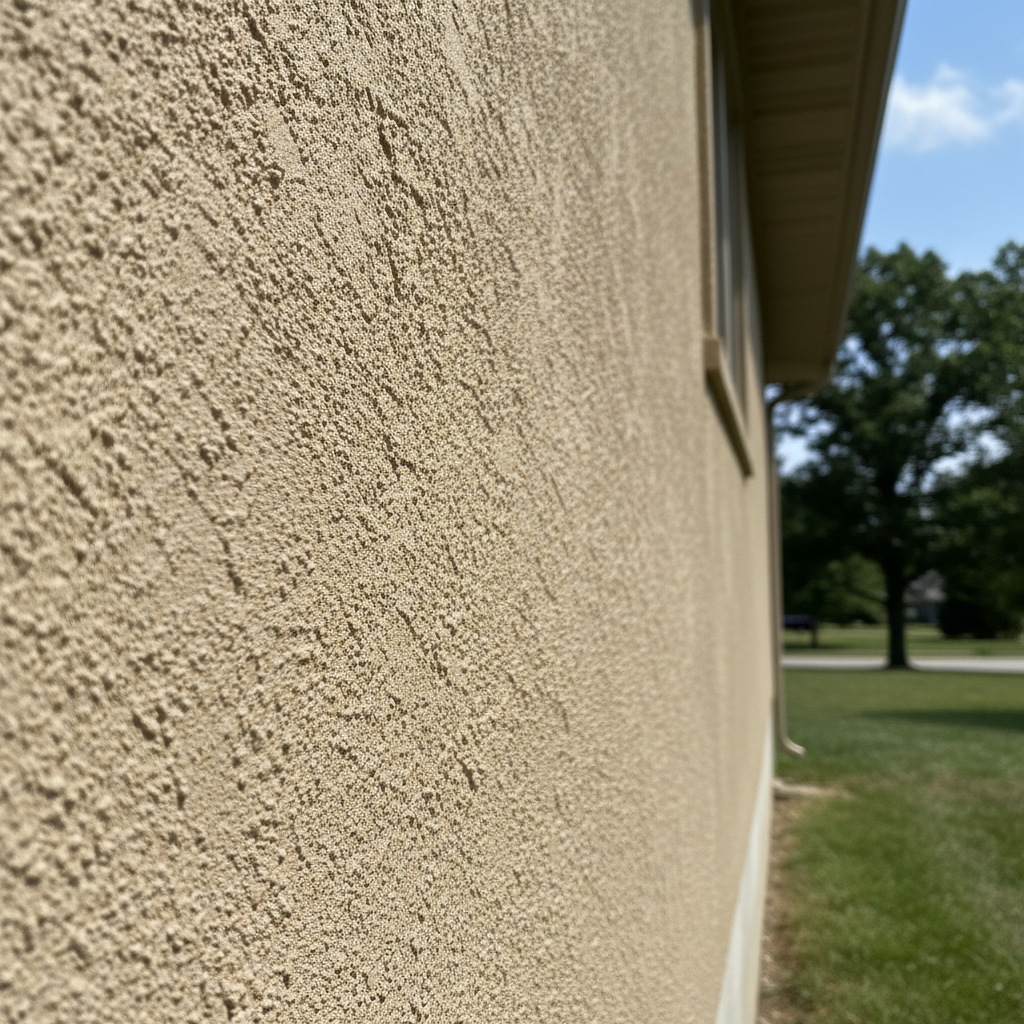
Alright, let us talk about stucco. As a local Stucco Contractor here in Topeka, we have heard just about every question from homeowners about their stucco exteriors. Stucco is a good material. It also comes with its own quirks and things you need to understand. We will tell you what you really need to know.
What is the deal with stucco cracks? Are they always a big problem?
Cracks in stucco are probably the number one thing folks ask us about. Stucco is a rigid material. It is made from cement, sand, and water. We apply it wet, and then it hardens up. So, some minor cracking is almost inevitable, especially with our wild temperature swings here in Kansas. Your house settles as well as materials expand and contract with the heat and cold. Those little hairline cracks can show up because of this. Topeka Stucco & Plastering understands these local conditions.
Most hairline cracks are not usually a huge cause for alarm. We are talking about cracks 1/16th of an inch or less. These cracks are often cosmetic. However, even small cracks can let water in, and that is where problems start. If you see cracks that are wider than a credit card, or if they are diagonal and radiating from windows and doors, or if they are forming a stair-step pattern, then you likely have a more serious issue. Those cracks can point to foundation movement as well as underlying structural problems. You definitely need a Stucco Contractor to check those out. Do not just patch them and hope for the best. That will not fix the root cause of the stucco damage in your Topeka home.
How can I tell if my stucco has moisture problems behind it?
This is important because hidden moisture is stucco's biggest enemy. Your stucco might look fine on the surface. Water can be doing real damage underneath. Here is what we tell people to look for with their Topeka stucco.
- Stains and Discoloration: Dark streaks, yellowish spots, or rusty patches are big red flags. We often see these especially near windows, doors, or the roofline. It means water is getting in and leaving its mark on your stucco.
- White Powdery Stuff (Efflorescence): If you see white, powdery mineral deposits on the surface, that is efflorescence. It happens when water gets into the stucco, dissolves salts, and then evaporates. This leaves the salts behind. It is usually not harmful to the stucco itself. It is a clear sign that water is getting in and moving through your walls.
- Bulging or Blistering: If parts of your stucco are bulging out or look like they are bubbling, that is trapped moisture. This moisture is between the layers. This weakens the stucco's integrity.
- Soft Spots: Go ahead and touch your stucco. We recommend checking especially around openings. If it feels soft or spongy, or even hollow when you tap it, that is a bad sign. It could mean rot or water damage to the sheathing or framing underneath your stucco.
- Mold or Mildew: Any mold or mildew growth on the stucco means persistent moisture. This is particularly true in shaded or damp areas. It is not just ugly. It can indicate deeper issues and even affect indoor air quality in your Topeka home.
If you spot any of these issues with your stucco, do not wait. Moisture problems behind stucco can get expensive fast. A professional moisture inspection with special tools like thermal imaging or meters can pinpoint the problem. This can be done without tearing your walls apart. Topeka Stucco & Plastering offers these Stucco Contractor services.
Does stucco actually help with my home's energy efficiency?
Yes, it can absolutely help. Stucco, especially traditional stucco, acts as a good thermal barrier. It is a dense material. This material helps keep your home cooler in the summer as well as warmer in the winter. This means your HVAC system does not have to work as hard. Topeka Stucco & Plastering can help with your energy efficiency goals.
Modern stucco systems are often called Exterior Insulation and Finish Systems (EIFS). These systems take it a step further. These EIFS systems include a layer of foam insulation applied to the exterior. The stucco then goes over that. This significantly boosts the R-value of your walls. The R-value is the measure of thermal resistance. Traditional stucco on its own might have an R-value of about 0.20 per inch. With an insulated system, you can get R-values from R-4 to R-12 per inch. Sometimes it is even higher depending on the insulation. For us here in Topeka, we get both scorching summers and freezing winters. That extra insulation can really make a difference in your energy bills. We are experienced Stucco Contractors with both traditional and EIFS stucco.
How often should I clean my stucco, and what is the best way to do it?
You should plan on cleaning your stucco exterior at least once a year. Maybe twice if it gets particularly dirty or you live on a dusty road in Topeka. The best way is usually the simplest. This involves a garden hose and a soft-bristle brush. Topeka Stucco & Plastering recommends regular maintenance for your stucco.
Here is the routine we recommend for your stucco cleaning:
- First, check for any cracks and repair them. You do not want water getting into places it should not.
- Rinse the stucco from the bottom up. This gets it thoroughly wet and prevents dirty water from staining dry areas.
- Mix a mild detergent with water. Dish soap is a good choice.
- Working in manageable sections, apply the solution. Gently scrub with your soft brush. Work from top to bottom.
- Rinse thoroughly.
You can use a pressure washer for your stucco, but you have to be careful. Keep it on a low-pressure setting. This means under 1,500 psi. Hold the nozzle at least 24 inches away from the surface. Too much pressure can damage the stucco. Avoid harsh chemicals. They can fade colored stucco or leave residues. Topeka Stucco & Plastering can also provide professional stucco cleaning services.
Is stucco a good choice for Topeka's climate, with our freeze-thaw cycles?
That is a fair question. It is one we get a lot, especially after a tough winter in Topeka. Stucco can do very well in Topeka. It is not without its considerations. Stucco is durable as well as resistant to things like fire and pests. However, our freeze-thaw cycles can be tough on any exterior material. When water gets into cracks and then freezes, it expands. This can make those cracks bigger. Topeka Stucco & Plastering understands the local climate.
The key for stucco in a climate like ours is proper installation. This includes good drainage as well as moisture management systems. This means making sure flashing around windows and doors is installed correctly. It also means your gutters and downspouts direct water away from the foundation. If it is installed right and maintained well, stucco will hold up. If not, you are asking for trouble. We have seen plenty of homes in older Topeka neighborhoods like Westboro. The stucco has lasted for decades because it was done right the first time. We are expert Stucco Contractors for the Topeka area.
How much does stucco repair typically cost?
Okay, so let us talk about stucco repair costs. This really depends on the size and type of damage. Minor crack repairs are usually on the lower end. These might be a few hundred bucks. If you have significant water damage, bulging, or structural issues, that is a whole different ballgame. Topeka Stucco & Plastering provides honest estimates for stucco repair.
Small to moderate stucco repairs might run you anywhere from $300 to $1,500. For larger sections, or if there is underlying moisture damage to the sheathing or framing, you could be looking at several thousand dollars. Some sources quote an average of $60 to $120 per square foot for professional repairs. This is especially true if it involves removing damaged stucco, repairing lath and moisture barriers, and then reapplying. The complexity of matching the existing texture and color also plays a role in the cost of your stucco repair in Topeka.
Our advice is to not try to DIY anything beyond the smallest hairline cracks. Stucco repair is a specialized skill. A botched job can lead to bigger, more expensive problems down the road. Get a few quotes from reputable local Stucco Contractors like Topeka Stucco & Plastering. We will give you an honest assessment of what needs to be done for your stucco. We are here to help Topeka homeowners.
What is the difference between traditional stucco and synthetic stucco (EIFS)?
This is a common point of confusion for homeowners in Topeka. When most people think of stucco, they are picturing traditional stucco. That is the stuff made from cement, sand, lime, and water. We apply it in layers over a metal lath. Topeka Stucco & Plastering works with both types of stucco.
Synthetic stucco, or EIFS (Exterior Insulation and Finish Systems), is different. It is a multi-layered system. It usually starts with a foam insulation board attached to the exterior sheathing. Then, a base coat with a fiberglass mesh is applied over the insulation. This is followed by a finish coat that looks like traditional stucco. EIFS is generally lighter than traditional stucco. It also offers better insulation because of that foam layer. It is also more flexible. This can make it more resistant to cracking from temperature changes. We are experienced Stucco Contractors with EIFS systems.
However, EIFS has had a bit of a reputation in the past for moisture problems. This is if it is not installed perfectly. It is a barrier system that does not breathe the same way traditional stucco does. Modern EIFS systems have made significant improvements in moisture management. Traditional stucco is cement-based. It is more porous and breathes better. It is also more susceptible to cracking from movement. Both have their place. Understanding which one you have or want is important for maintenance as well as potential repairs. Topeka Stucco & Plastering can explain these differences further for your home.