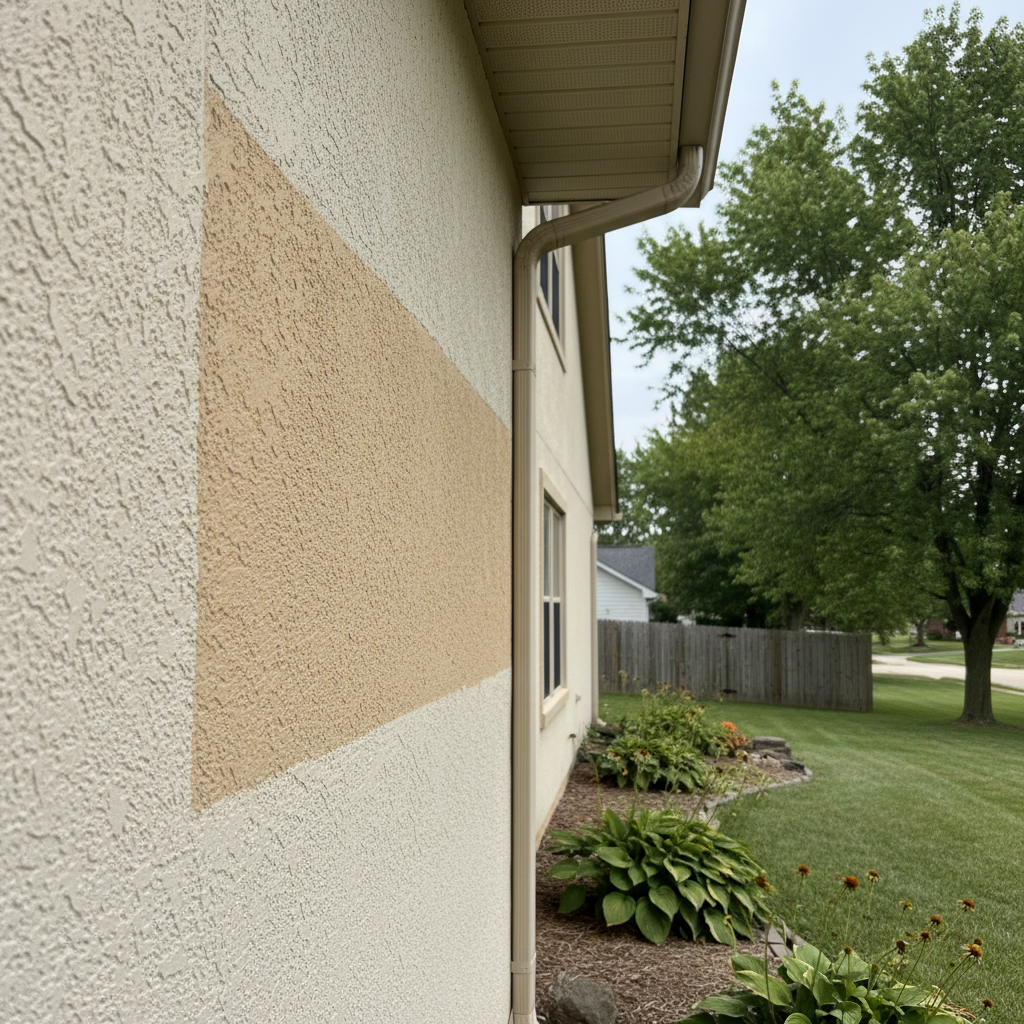
So, you've got stucco on your place, and you'd like it to stick around for a while. Smart move. Stucco's a tough material, really durable, especially good at shrugging off our wild Kansas weather – those scorching summers, bitter winters, and sudden hailstorms. But "tough" isn't the same as "bulletproof." Just like anything else around your house, it needs a little TLC to keep looking good and doing its job.
Regular Upkeep: Your Stucco's Best Friend
Keeping your stucco in tip-top shape honestly isn't rocket science. Most of it comes down to common sense and, well, a bit of effort. The biggest thing? Keep it clean. Dust, plain old dirt, pollen, even mildew can build up on the surface. That doesn't just look crummy; it can actually trap moisture against the stucco, which is precisely what you want to avoid. I usually tell folks to give it a good, gentle cleaning once a year, maybe twice if your house is under a lot of trees or you live near a dusty road.
You can just use a garden hose with a spray nozzle. A gentle rinse is all it takes. For those tougher spots, a soft-bristle brush and a mild soap solution (like dish soap and water) will do the trick. Whatever you do, don't go crazy with a high-pressure washer. You might think you're doing a fantastic job, but that powerful stream can actually wreck the stucco, forcing water into tiny cracks or even blasting off the finish. We've seen it happen, believe me. If you absolutely must use a pressure washer, keep the pressure low and the nozzle far enough away that it's just cleaning, not carving.
Another crucial point is managing moisture. Double-check that your gutters are clean and draining properly, pushing water away from your foundation. And your sprinkler system? Give that a look too. You definitely don't want sprinklers constantly spraying water directly onto your stucco walls. That never-ending dampness is just asking for trouble.
Spotting Trouble: What to Watch For
Your stucco usually gives you hints when something's off. You just need to know what those hints are. Take a walk around your house a couple of times a year, maybe in the spring after the snow melts and again in the fall before winter really sets in. Pay extra close attention to these things:
- Cracks: Small hairline cracks are pretty normal, honestly. Stucco expands and contracts with temperature changes, especially with our crazy Topeka temperature swings. But if you spot cracks wider than a credit card, or if they're spreading out in a spiderweb pattern, that's a definite red flag. Vertical cracks often suggest settlement, while horizontal ones can point to other structural problems.
- Stains: Dark streaks, particularly under windows, near rooflines, or around pipes, usually mean water is sneaking in somewhere. Green or black patches? That could be mold or mildew, which screams "persistent moisture."
- Bulges or Soft Spots: Gently press on the stucco in different areas. If it feels soft, spongy, or you notice areas bulging outwards, that's a serious sign of water damage behind the stucco. The material underneath might be rotting away.
- Efflorescence: This looks like a white, powdery substance on the surface. It's mineral salts left behind when water evaporates from inside the stucco. Basically, water's getting in and then drying out, leaving those salts behind.
- Pest Activity: If you see holes or tunnels, or signs of insects like carpenter ants or termites, that's a double whammy. Pests are often drawn to damp, rotting wood behind the stucco.
Making Your Stucco Repair Last
Let's say you've had some repairs done, maybe by us at Topeka Stucco & Plastering, or someone else. How do you ensure that repair actually lasts? First, make sure the underlying problem was truly fixed. If we repaired a crack, but the gutter above it is still overflowing, you'll be right back where you started. We always try to pinpoint the root cause, but it's good for you to be aware too.
After a repair, keep an eye on that spot. Make sure it's drying correctly and that no new issues are popping up. Good airflow around your home helps a lot. If you've got dense shrubs or trees right up against your stucco, consider trimming them back. Air movement really helps dry out any moisture that might gather.
Also, think about the type of stucco you have. Older homes in places like Westboro or College Hill often feature traditional three-coat stucco, which is incredibly durable. Newer homes might have EIFS (Exterior Insulation and Finish System). While EIFS offers fantastic insulation, it's a bit more prone to impact damage and needs careful sealing to keep water out. Knowing what you've got helps you understand its specific needs.
When to Call a Professional
You can absolutely handle the cleaning and those visual inspections yourself, no problem. But when you spot those big red flags – wide cracks, persistent staining, soft spots, or bulging – that's when you need to call in a pro. Don't try to patch over serious water damage yourself. You might just cover up the symptom without fixing the real issue, and that can lead to much bigger, more expensive problems down the road. Trust me.
A professional can properly diagnose the problem, figure out exactly where the water's coming from, and make a repair that actually lasts. We've got the right tools and the know-how to match textures and colors so your repair blends in beautifully. Ignoring these signs won't make them disappear; it'll only make them worse. A little proactive care and knowing when to ask for help will keep your stucco looking fantastic and protecting your home for decades.